
I. You Think PPE Only “Blocks Injuries”? Actually, It’s “Saving You in Advance”
In most people’s minds, PPE has always been the “last line of defense.”
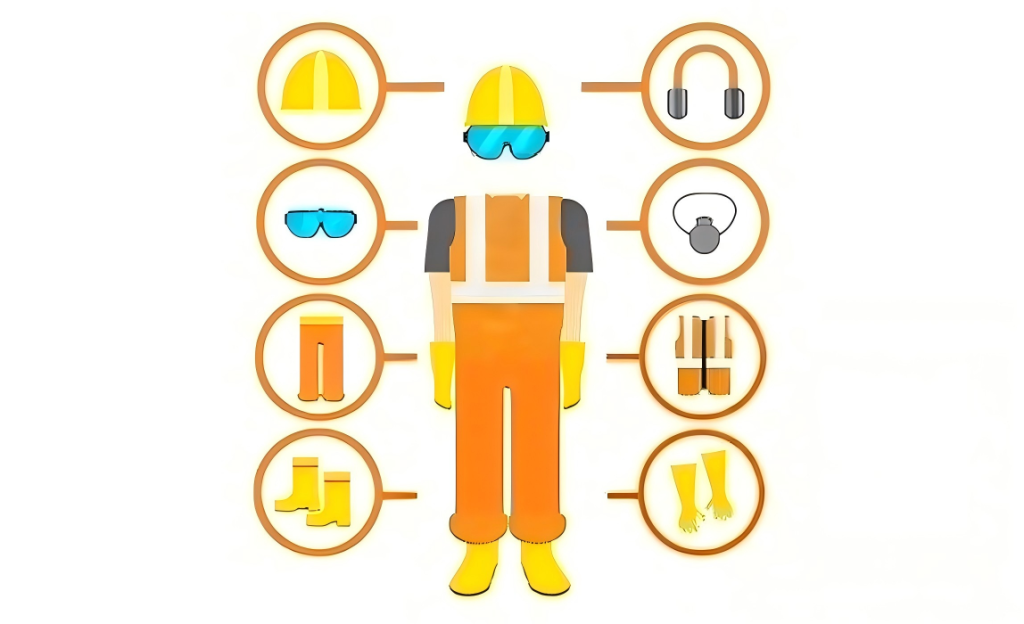
Safety helmets—protect against impacts
Gloves—protect against cuts
Safety shoes—protect against crushing injuries
These pieces of equipment share one common characteristic:
They only begin to function when an accident occurs.
But that’s precisely the problem.
Most accidents in reality don’t happen “without warning.”
Fatigue, abnormal environments, operational errors… these dangers often already exist.
Therefore, a completely new question arises:
What if PPE could warn you before an accident happens?
This is precisely the core logic that “Smart PPE” is changing.
II. What are “Proactive Warning PPEs”? How exactly are they “smart”?
In short, the new generation of work safety equipment is no longer just “wearable,” but has become:
A system capable of sensing, analyzing, and alerting
According to the latest industry trends, these devices typically possess three main capabilities:
Sensing
- Temperature, humidity, toxic gases
- Heart rate, body temperature, fatigue status
- Falls, impacts, abnormal posture
Analysis
- AI determines the presence of danger
- Data comparison with historical behavior
- Identifying abnormal actions or environmental changes
Alert
- Audio alerts
- Vibration alarms
- Real-time notification to management personnel
Fundamental change: From “protective equipment” → “data terminal”
Today’s work safety equipment is beginning to integrate IoT, AI, and sensor technologies to achieve real-time monitoring and early warning functions.
III. Why is the industry collectively shifting towards “proactive early warning”?
This is not “technological showmanship,” but rather a necessity driven by reality.
1. Accidents haven’t decreased; they’ve become more complex.
Data shows that workplace accidents continue to occur in recent years, increasing safety pressures on businesses.
The reasons are simple:
- Faster work pace
- More complex environments
- A mix of automation and manual labor
Traditional safety equipment can no longer keep up with the speed of risk changes.
2. The biggest risk is actually “people.”
Research and industry data repeatedly prove that:
- Fatigue
- Distraction
- Improper operation
are the real sources of accidents.
Traditional safety equipment—
cannot identify whether a person is in a dangerous situation.
But smart safety equipment can.
For example:
- Detecting abnormal heart rate → Indicates overwork
- Detecting abnormal movements → Identifies incorrect operations
- Detecting resting time → Determines if fainting has occurred
3. Businesses are starting to consider “safety costs”
In the past, personal protective equipment (PPE) was a cost.
Now, it’s becoming an investment.
The reasons are practical:
- The cost of an accident far exceeds the cost of equipment.
- Downtime, compensation, and reputational damage are enormous.
- Data-driven safety is easier to manage.
Therefore, more and more companies are beginning to accept:
“Accident prevention” is more important than “loss reduction.”
IV. To what extent have smart PPE evolved?
Many people think this is “future technology,” but it’s already a reality 👇
1. Safety Helmets That “Think”
The new generation of safety helmets can:
- Record impact intensity
- Detect high temperatures/toxic gases
- GPS locate personnel position
Even:
They can:
Worker falls → Automatic alarm → Management receives notification
The application of this type of equipment is growing rapidly, with smart head protection equipment becoming one of the fastest-growing sub-sectors.
2. Smart Work Clothes That “Breath”
More than just comfort:
- Automatically adjust temperature
- Detect body condition
- Monitor environmental exposure time
For example, in high-temperature warehouses or cold chain environments:
The system can provide early warning of “imminent heatstroke/hypothermia”
3. Safety Shoes That “SOS”
Sounds like science fiction, but it already exists:
- Fall detection
- Abnormal walking recognition
- Prolonged stillness alarm
If a worker falls, the shoes “detect the problem” before the person does.
4. AI Vision Systems: Even Recognizing “Not Wearing a Helmet”
It’s not just wearable devices; the environment is becoming “intelligent.”
Some factories have already deployed:
- Cameras + AI Recognition
- Automatic detection of PPE wearing
- Real-time alerts for violations
Related research shows that AI recognition systems can effectively detect PPE wearing and improve safety management efficiency.
V. The real change is not in the equipment, but in the “safety logic”
Many people focus on the equipment itself, but the bigger change is actually:
A complete reconstruction of safety concepts
Past: Accident occurs → Protection activated
Now: Risk emerges → Early intervention
This brings three key changes👇
1. From “Post-incident handling” to “Pre-incident prediction”
The greatest value of intelligent PPE is not “prevention,” but:
Risk prediction
For example:
- Continuous high temperatures + high heart rate → Risk of heatstroke
- Abnormal posture → Risk of operational errors
2. From “Personal Protection” to “System Management”
Past:
Each person was responsible for their own safety
Now:
All data is connected to one system
Managers can see:
- Who is most fatigued
- Which area is most dangerous
- Which time period has the highest risk
3. From “Experience-Based Judgment” to “Data-Driven Decision-Making”
Traditional safety relies on:
- Experience of veteran employees
- On-site intuition
Now it’s becoming:
- Real-time data
- AI analysis
Safety becomes “quantifiable”
VI. Why is it said that: Personal protective equipment (PPE) is becoming the “next data entry point”?
A very interesting trend is:
PPE is becoming part of the Industrial Internet
Industry data shows that the smart PPE market is growing rapidly and is gradually becoming an important part of industrial digitalization.
The underlying logic is:
- Each employee = a data node
- Each piece of PPE = a sensor
- Each action = a piece of data
Ultimately forming:
A real-time data network of “people-equipment-environment”
VII. But it’s not perfect: The real challenges of smart PPE
No trend is without its advantages.
1. Cost Issues
- Smart devices are more expensive.
- Limited acceptance among SMEs.
2. Usage Habits
- Will employees be willing to wear them?
- Will they feel “monitored”?
3. Data Management
- Data security
- System maintenance
Therefore, the current stage is:
“Pilot application → Gradual popularization”
VIII. What will work safety supplies look like in the next 5 years?
We can make some bold predictions👇
- More Invisible
Sensors directly embedded in clothing/shoes
- More Intelligent
AI automatically analyzes risks
No human intervention required
- More Personalized
Adjusted according to each person’s physical condition
- More Systematic
Fully integrated with warehouses, equipment, and systems
IX. Conclusion: What is truly being changed is “safety itself”
Returning to the initial question:
What exactly are work safety supplies changing?
The answer is actually quite simple:
It’s not that safety helmets have become smarter.
It’s not that gloves have become more advanced.
It’s that:
Safety has shifted from passive to proactive.
In the past, safety was about “solving problems after they occurred.”
Now, safety is becoming:
Early detection and intervention.
This is not just a technological upgrade, but a cognitive upgrade.
The moment personal protective equipment (PPE) begins to “think”—it truly protects not just the body, but the entire system.
FAQ
Q1: What are smart PPEs?
They refer to PPE equipment that integrates sensors, AI, and IoT technologies to monitor the environment and human condition in real time and provide early warnings.
Q2: What are the applications of smart PPEs?
Safety helmets, work clothes, safety shoes, gloves, and AI visual monitoring systems, etc.
Q3: Why are companies starting to use smart safety equipment?
To reduce accident rates, improve management efficiency, and achieve safety prevention through data.
Leave a Reply